
Goldendoodle Temperament: What New Owners Need to Know
Last updated: 2026-03-24
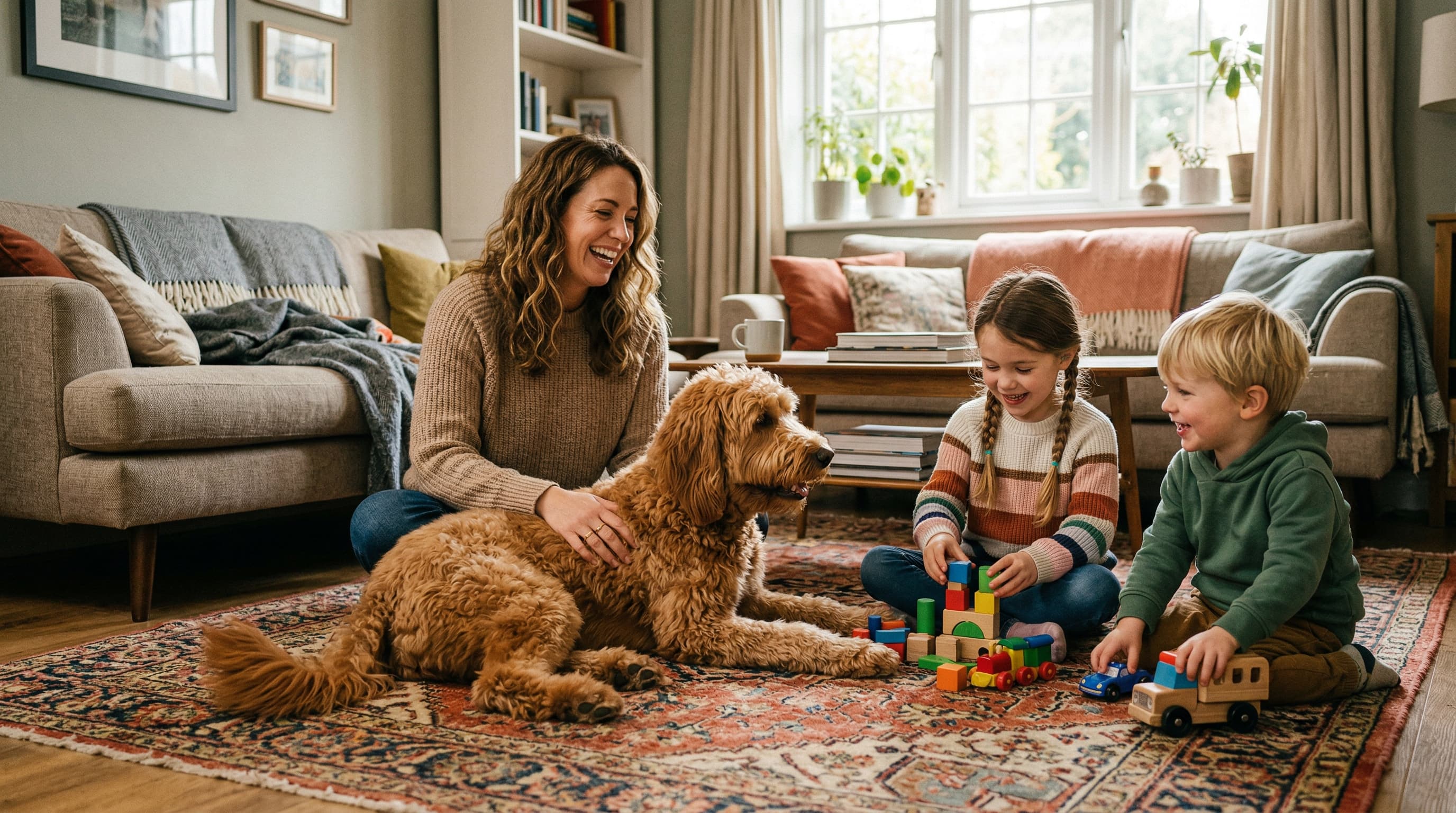
Goldendoodles have skyrocketed in popularity over the past two decades, and their temperament is a huge reason why. Combining the Golden Retriever's legendary friendliness with the Poodle's sharp intelligence, Goldendoodles offer one of the most well-rounded temperaments in the dog world. But what exactly should new owners expect? Let's dive deep into the Goldendoodle personality.
The Golden Retriever × Poodle Personality Blend
To understand a Goldendoodle's temperament, it helps to understand both parent breeds. Golden Retrievers are famously gentle, patient, eager to please, and deeply devoted to their families. They were originally bred as gun dogs, designed to work cooperatively with hunters — which is why they're so attuned to human emotions and commands. Poodles, on the other hand, are considered one of the most intelligent dog breeds in the world, ranking second only to the Border Collie. Poodles are alert, proud, and highly trainable.
When you combine these two breeds, you get a dog that is both emotionally intelligent (reads the room beautifully) and intellectually sharp (learns commands quickly). This dual intelligence is what makes Goldendoodles exceptional family dogs, therapy dogs, and even service dogs.
Key Goldendoodle Personality Traits
1. Friendly and Social
Goldendoodles are remarkably social dogs. They tend to greet strangers with wagging tails rather than suspicion, which makes them terrible guard dogs but wonderful family companions. They typically get along well with other dogs, cats, and even smaller pets when properly socialized. Their friendliness extends to everyone — neighbors, delivery drivers, guests, and especially children.
This social nature means Goldendoodles don't do well when left alone for long periods. They are prone to separation anxiety if not properly trained. If you work full-time outside the home, plan for a dog walker, doggy daycare, or a companion pet to keep your Goldendoodle company.
2. Intelligent and Trainable
Thanks to their Poodle heritage, Goldendoodles are exceptionally intelligent and eager to learn. They respond beautifully to positive reinforcement training — treats, praise, and play are all powerful motivators. Most Goldendoodles can learn basic obedience commands (sit, stay, come, down) within just a few training sessions.
Their intelligence is a double-edged sword, however. A bored Goldendoodle is a destructive Goldendoodle. Without adequate mental stimulation, they may resort to chewing furniture, digging holes, or finding other creative ways to entertain themselves. Puzzle toys, training sessions, and interactive play are essential. Check our new puppy checklist for recommended toys and training tools.
3. Gentle and Patient
The Golden Retriever influence gives Goldendoodles a remarkably gentle and patient disposition. This is one of the primary reasons they excel as family dogs with children. They tend to be tolerant of the sometimes-rough handling from toddlers (though all interactions between young children and dogs should be supervised), and they rarely show aggression.
This gentleness also makes them outstanding therapy and emotional support dogs. Many Goldendoodles work in hospitals, nursing homes, schools, and disaster relief settings because of their calm, comforting presence.
4. Playful and Energetic
Goldendoodles are moderately to highly energetic, depending on their size and individual personality. Standard Goldendoodles tend to have more energy and stamina than Minis, but all Goldendoodles enjoy daily exercise. They love fetch, swimming, hiking, and running alongside their owners.
Most Goldendoodles need 30–60 minutes of exercise per day. This can be split between a morning walk and an evening play session. Without adequate exercise, Goldendoodles can become hyperactive or anxious. Learn more about how size affects energy level in our size guide.
5. Loyal and Affectionate
Goldendoodles form deep bonds with their families. They are classic "velcro dogs" that want to be wherever you are — following you from room to room, lying at your feet while you work, and cuddling on the couch in the evening. This loyalty is endearing but, again, contributes to their tendency toward separation anxiety.
Many Goldendoodle owners describe their dogs as being emotionally intuitive — seeming to sense when their owner is sad, stressed, or unwell, and responding with extra affection and closeness. This emotional intelligence is one of the most beloved Goldendoodle traits.
6. Adaptable
One of the Goldendoodle's greatest strengths is their adaptability. They can thrive in a wide range of environments — from country estates to city apartments — as long as their physical and mental needs are met. They adjust well to different family structures, including singles, couples, families with children, and seniors. This adaptability, combined with their range of available sizes, means there's truly a Goldendoodle for almost everyone.
Does Generation Affect Temperament?
While coat type is heavily influenced by generation, temperament is less predictable by generation alone. That said, there are some general tendencies:
- F1 Goldendoodles (50/50 mix) often have the strongest Golden Retriever personality traits — extra friendly, somewhat goofy, extremely people-oriented
- F1B and later generations (higher Poodle content) may show slightly more Poodle-like traits — sharper intelligence, slightly more reserved with strangers initially, but still very friendly once comfortable
- Multigen Goldendoodles from good breeders often have the most consistent temperament because breeders have been selecting for personality across multiple generations
The biggest factor in temperament is breeding and socialization, not generation. A well-bred, well-socialized Goldendoodle of any generation will be a fantastic companion. This is why choosing a responsible breeder who temperament-tests puppies and begins early socialization is so important.
Goldendoodles with Children
Goldendoodles are consistently rated among the top family dogs for households with children. Their patience, gentleness, and playful energy make them ideal playmates. Here are some specifics:
- Babies and toddlers: Goldendoodles are typically patient and gentle. Medium and Mini sizes are recommended, as Standards can accidentally knock over small children. Always supervise interactions
- School-age children: This is the sweet spot. Goldendoodles love playing fetch, running in the yard, and learning tricks with kids this age
- Teenagers: Goldendoodles make wonderful companions for teens, offering both active outdoor play and calm indoor companionship
Goldendoodles with Other Pets
Most Goldendoodles coexist beautifully with other animals when properly introduced. They typically get along with:
- Other dogs: Goldendoodles are generally non-aggressive and playful with other dogs. They make great companions for existing dogs in the household
- Cats: When raised with cats or introduced slowly, most Goldendoodles learn to live peacefully with feline family members
- Small animals: Some Goldendoodles have a prey drive (inherited from either parent breed). Supervision is recommended around rabbits, hamsters, and other small pets
Common Behavioral Challenges
No breed is perfect, and Goldendoodles do come with some common behavioral challenges that new owners should be prepared for:
- Mouthing/nipping as puppies: Both Golden Retrievers and Poodles are mouthy breeds. Goldendoodle puppies will need consistent bite-inhibition training
- Jumping: Their enthusiasm can lead to jumping on people. Consistent training from an early age helps manage this
- Separation anxiety: Their strong attachment to their owners can make alone time difficult. Crate training and gradual desensitization are essential
- Counter surfing: Standards and Mediums are tall enough to reach counters, and they're smart enough to know food is up there
- Leash pulling: Their energy and enthusiasm can make leash walking challenging without proper training
All of these challenges are manageable with consistent, positive-reinforcement training. Goldendoodles are eager to please and respond quickly to training — the key is starting early and being consistent.
The Role of Early Socialization
A Goldendoodle's adult temperament is shaped by both genetics and environment. Even the best-bred puppy needs proper socialization during the critical period (3–16 weeks of age) to reach their full potential as a well-rounded adult dog.
Good breeders begin socialization before puppies leave for their new homes. They expose puppies to different sounds, surfaces, people, and gentle handling. Once your puppy comes home, continue socialization by exposing them to a wide variety of experiences in a positive, controlled way.
Our family-raised Goldendoodles at Doodle Bliss are known for their gentle temperament — because we begin socialization and enrichment protocols from day one. Every puppy is exposed to household sounds, children, other dogs, and various textures before they go home with their families.
Final Thoughts
The Goldendoodle temperament is one of the breed's greatest assets. Friendly, intelligent, gentle, loyal, and adaptable — these dogs truly do have it all. They're not the right dog for everyone (no breed is), but for families looking for an affectionate, trainable, and sociable companion, the Goldendoodle is hard to beat.
The key to getting a Goldendoodle with excellent temperament is choosing the right breeder. Look for breeders who temperament-test their puppies, begin early socialization, and breed for personality as much as they breed for coat and structure. Read our complete guide on how to choose a responsible Goldendoodle breeder to learn exactly what to look for.
🛒 Our Top Picks for Goldendoodle Enrichment
- Outward Hound Nina Ottosson Puzzle Toy — Challenge your Goldendoodle's brilliant mind
- KONG Classic Dog Toy — Fill with treats for hours of mental stimulation
- PetSafe Easy Walk Harness — Front-clip harness to stop leash pulling
- Chuckit! Ultra Ball Launcher — Perfect for burning off that Goldendoodle energy